Cannabis Product Photography: What No One Tells You About Selling More
Most cannabis brands don’t think they have a photography problem.
They think they have a distribution problem. Or a pricing problem. Or a market saturation problem. Sometimes they call it a marketing problem. But photography rarely comes up as the root issue.
That’s because product photography is usually treated like a deliverable. Something you check off once the product is ready. A few clean shots, a lifestyle image if there’s time, maybe something square for social media. The assumption is that once the visuals exist, the real work begins somewhere else.
What no one really tells you is that for most cannabis brands, the photos are the work. They are the first point of contact, the first credibility check, and often the deciding factor long before anyone smells, tastes, or experiences the product itself.
In a crowded market, photography doesn’t just make things look good. It removes friction.
The Silent Role Photography Plays in Decision-Making
Every person who encounters your product is making a decision with incomplete information.
A dispensary buyer scrolling through a pitch deck. A budtender glancing at a new SKU on a tablet. A customer seeing a thumbnail on a menu screen or website. None of them have the full story. They don’t know your process, your standards, or how much care went into what’s inside the packaging.
All they have is what’s visible.
Photography fills in those gaps. Or it leaves them empty.
Strong product photography doesn’t convince people to buy. It makes buying feel reasonable. It answers unspoken questions quickly and quietly. Does this brand feel legitimate? Does this product belong at this price point? Does this look like something other people already trust?
When photos fail to answer those questions, hesitation creeps in. And hesitation is usually invisible to the brand experiencing it. The buyer doesn’t complain. The customer doesn’t send feedback. They just move on.
This is why so many brands with genuinely great products struggle to build momentum. The issue isn’t quality. It’s communication.
Why “Good Enough” Is Rarely Good Enough
There’s a common mindset that if a photo is sharp, well-lit, and accurate, it’s doing its job. And technically, that’s true. The product is visible. The colors are correct. Nothing looks broken.
But visibility isn’t the same as persuasion.
“Good enough” photos tend to exist in isolation. They don’t work together. They don’t guide attention. They don’t reinforce a larger identity. They simply document what exists.
Documentation has value, but it doesn’t sell.
When photography is approached as a one-off task, it usually results in images that feel disconnected. Different lighting styles from shoot to shoot. Different moods depending on who was holding the camera. Different framing choices with no clear reason behind them.
Individually, each image might be fine. Collectively, they don’t build confidence.
The problem with this approach is that it places all the responsibility on explanation. On captions. On sales reps. On budtenders. On packaging copy. On education.
But most purchasing decisions in cannabis happen before education kicks in. They happen at the glance level.
If the visuals don’t immediately suggest clarity and intention, the brand starts from behind.

Selling Starts Before Anyone Reads a Word
One of the biggest misconceptions in cannabis marketing is the belief that people buy based on information.
In reality, information usually comes after interest. And interest is sparked visually.
Before anyone reads about terpene profiles or cultivation methods, they are subconsciously evaluating whether the product feels worth their attention. Photography sets that baseline.
This is especially true online, where products are often reduced to small images competing for attention on menus, marketplaces, and search results. At that scale, subtle differences in lighting, contrast, and composition matter more than brands expect.
A well-considered product photo doesn’t shout. It feels composed. Balanced. Intentional. It creates a sense that someone cared enough to get it right.
That sense of care translates directly into perceived value.
This is why brands that invest in photography strategically tend to have an easier time maintaining pricing. The visuals do some of the justification work before any conversation happens.
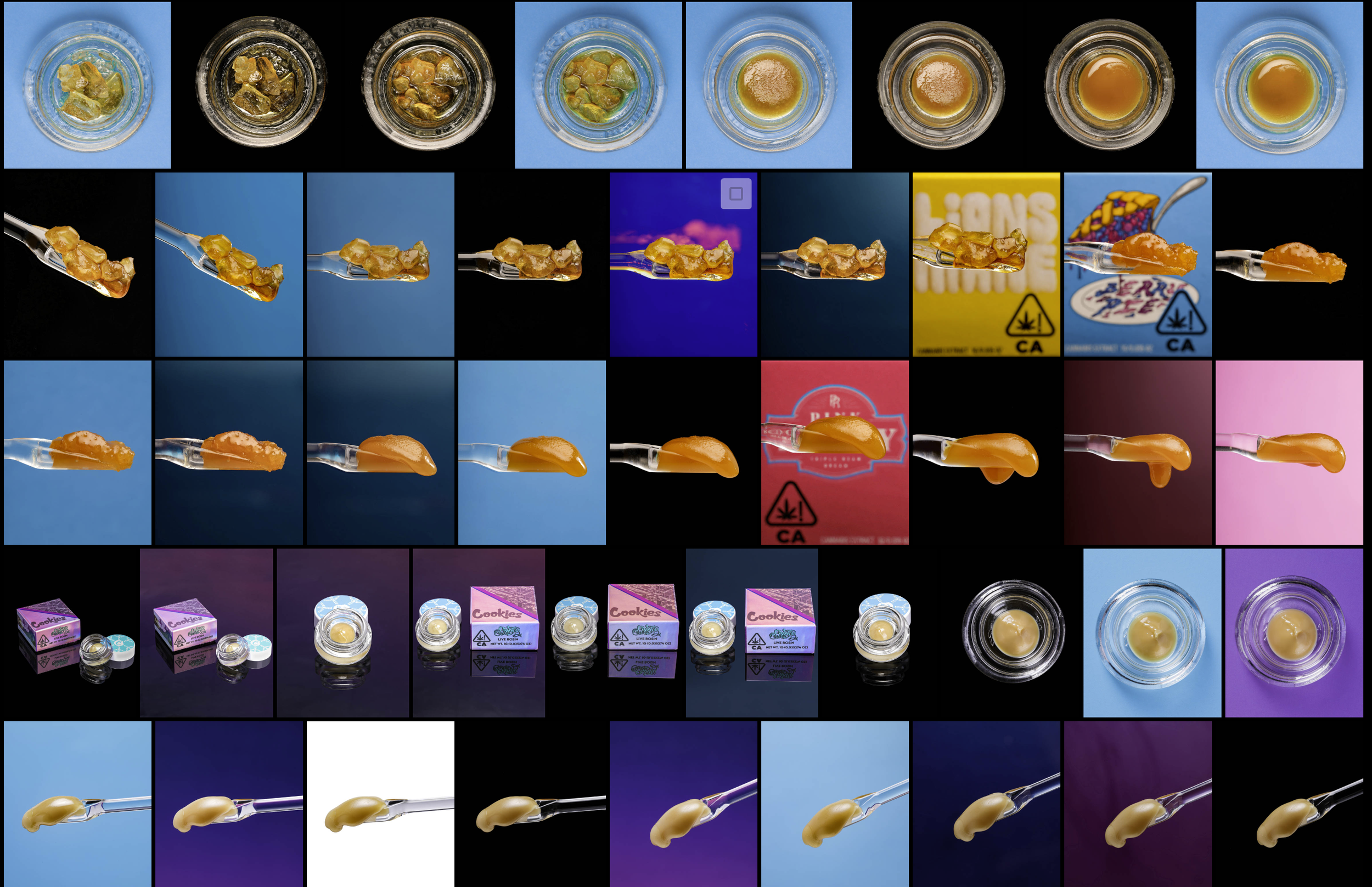
Examples of Dynamic yet consistent product photography for Menus.
Photography as Sales Infrastructure, Not Content
When photography is framed as content, it’s easy to treat it as disposable. You use it for a post, a launch, a campaign, and then move on.
When it’s framed as infrastructure, the mindset changes.
Infrastructure images are designed to last. They’re versatile. They work across platforms. They hold up when reused in different contexts. They reinforce the same message whether they appear on a website, in a sales deck, or in a retailer’s system.
This kind of photography is less about trends and more about fundamentals. Clear product representation. Consistent lighting. Thoughtful framing. Cohesive styling.
It’s also where the compounding effect comes in.
A strong photo set doesn’t just serve one purpose. It quietly supports everything else you do. Website conversions improve because the product feels trustworthy. Wholesale conversations go smoother because buyers can immediately visualize shelf presence. Marketing materials feel cohesive because everything speaks the same visual language.
Over time, those small advantages add up.
The Gap Between How Brands See Their Product and How Customers Do
Inside a brand, the product is familiar. You’ve handled it, refined it, adjusted it. You know what makes it special.
Outside the brand, none of that context exists.
Customers and buyers are encountering your product cold. They don’t know what they’re supposed to notice. They don’t know which details matter. They’re relying entirely on what’s presented to them.
This is where photography does its most important work. It directs attention. It subtly tells the viewer where to look and what to care about.
When photography lacks intention, viewers are left to interpret the product on their own. And interpretation without guidance often leads to indifference.
The goal isn’t to overwhelm people with detail. It’s to present the product in a way that feels confident and complete. Like nothing is missing.
Why Momentum Matters More Than One-Off Sales
Most brands don’t fail because people hate their product. They fail because momentum never builds.
Sales trickle in instead of stacking. New releases feel quiet. Reorders take longer than expected. Retailers hesitate to double down.
Visuals play a larger role in momentum than many brands realize.
When your photography is consistent and intentional, each new interaction reinforces the last one. People recognize the brand faster. They remember seeing it before. Familiarity builds trust, even if they can’t articulate why.
When visuals are inconsistent, every interaction feels like a reset. The brand has to earn attention again and again.
This is exhausting, and it’s expensive.
Strong product photography doesn’t guarantee success, but it removes unnecessary resistance. It lets the rest of your efforts work harder.
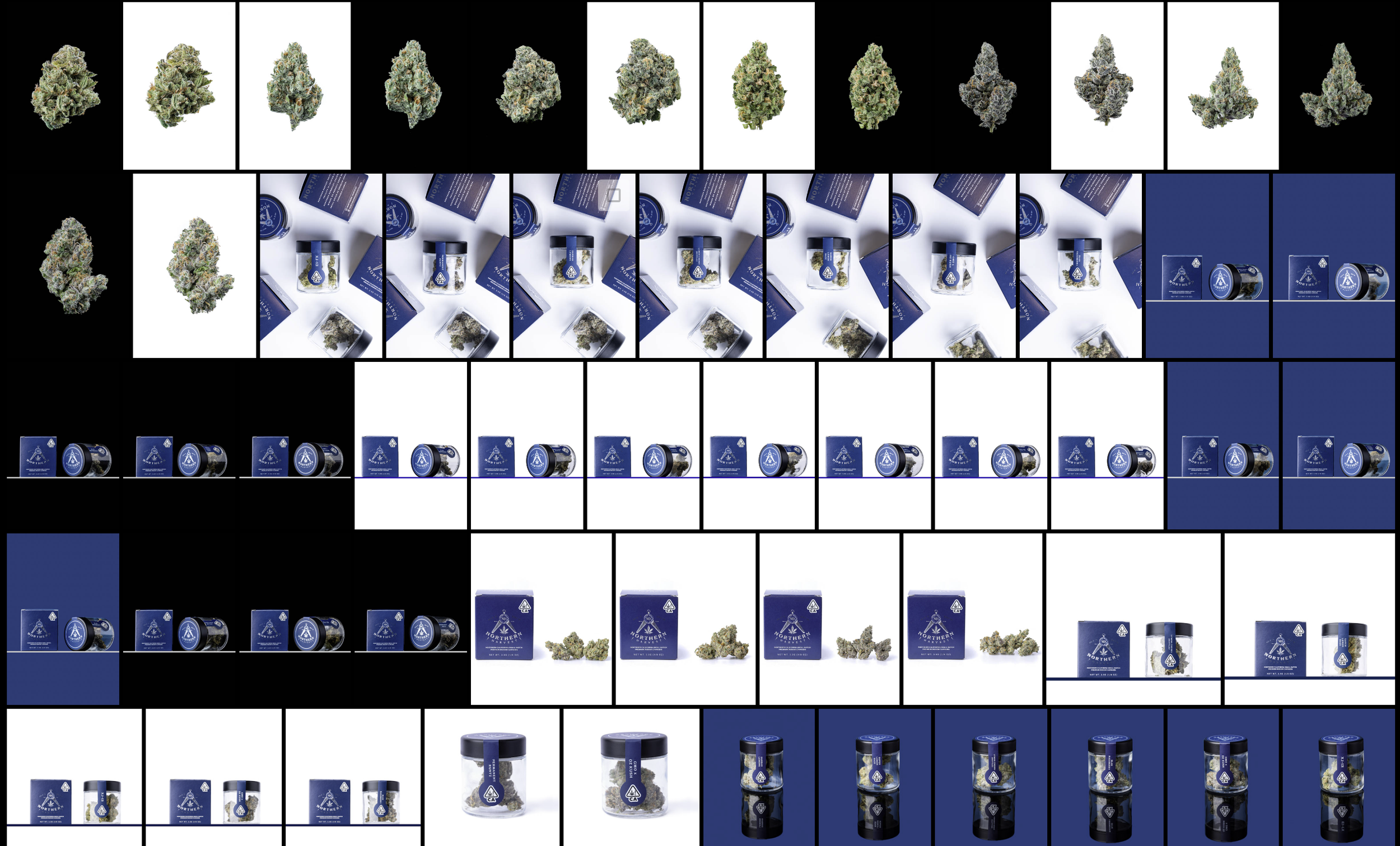
Consistency in product imagery
What Selling More Actually Looks Like
Selling more doesn’t usually mean convincing people harder. It means making the decision easier.
Photography contributes to that ease by eliminating confusion, signaling legitimacy, and reinforcing value. It helps people move forward without needing reassurance.
This is why the most effective product photos often feel understated. They don’t rely on gimmicks. They don’t distract. They simply present the product in its best, most honest form.
That honesty is powerful. It suggests confidence. And confidence is contagious.
When brands stop treating photography as decoration and start treating it as communication, everything downstream improves.
The photos aren’t louder. They’re clearer.
And clarity sells more than hype ever will.
